Where CS2 skins come from: cases, collections and drops
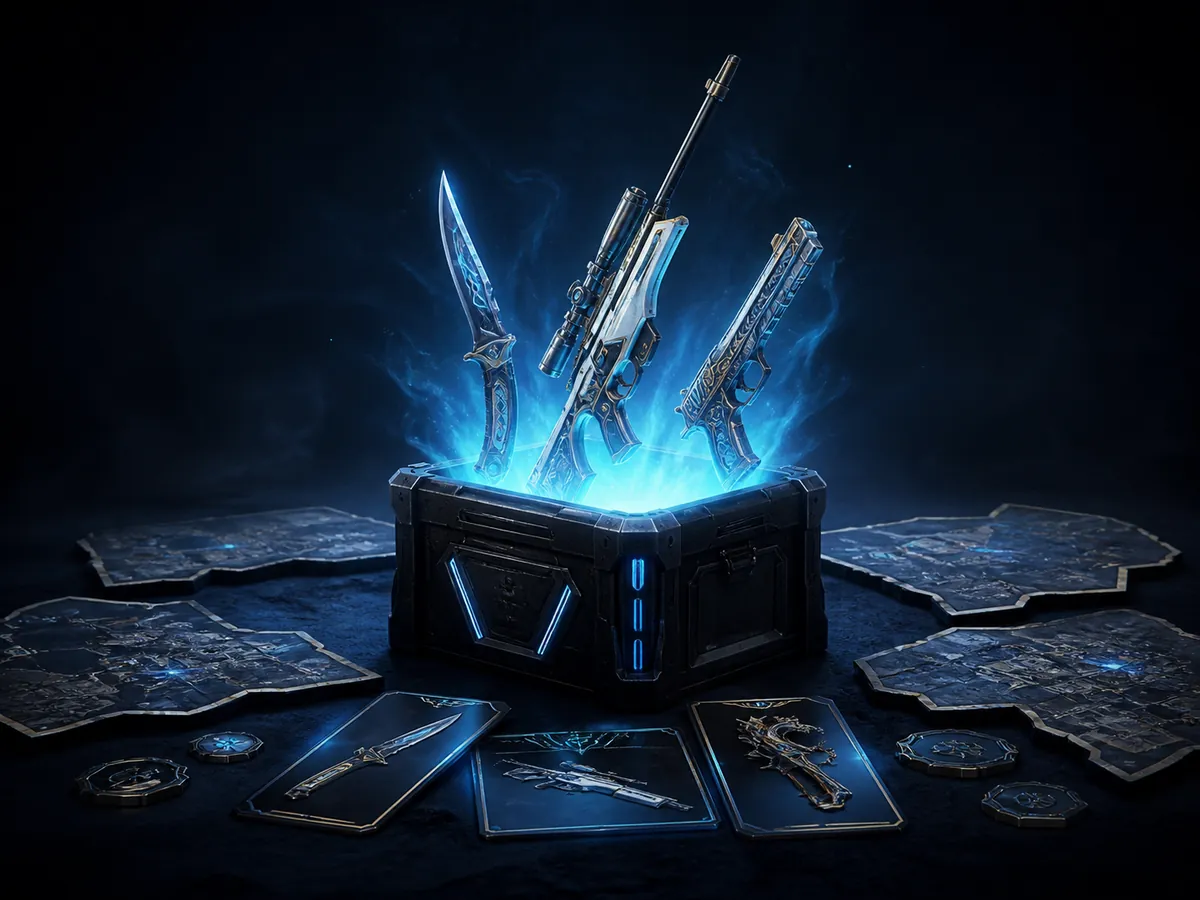
Each skin has a source, and it determines how many copies exist and whether new ones will appear. This is the only pricing factor with clear mechanics, so understanding it is more useful than any forecasts.
All sources of items, how the collection differs from case, what an active drop pool is and why sources taken out of circulation affect the price.
Main sources
cases. They fall accidentally during the game and can be opened with a key for money. Inside is a set of items from one collection plus a chance for a knife or gloves.
Weekly drop. In-game time rewards you with an item from collections that are currently in the active reward pool. Free, but set is limited.
Souvenir sets. Issued to tournament spectators, inside was an item from the collection of the corresponding card with tournament stickers.
In-game store and events. Individual objects appear through them, bypassing conventional mechanisms.
Exchange contracts. Ten items of the same rarity are exchanged for one item of a higher rarity from the same collections.
Collections and cases
A collection is a set of skins, united by a theme and a map. case is a container from which items from a specific collection drop.
Not all collections are associated with cases. There are collections of cards, items from which drop directly in weekly rewards or drop from souvenir sets - without any keys.
The name of the collection is always indicated in the item description. It is used to determine where the item comes from and whether its supply continues to be replenished.
Active drop pools and discontinued supply
Not all cases fall at the same time. There is a limited set in the active pool, the rest have been removed from the drop - new copies no longer appear.
It’s the same with collections in weekly rewards: their composition changes periodically, and the collection may no longer be replenished.
This is what creates the long-term price difference. The supply of case withdrawn from circulation is finite and is gradually spent on openings - the supply is slowly declining.
But I will repeat what is always worth remembering: a reduction in supply increases the likelihood of growth, but does not guarantee it. We need demand. A rare item that no one needs will remain cheap for as long as you like.
- See the collection name in the item description - this is the starting point of any assessment.
- Check the volume of transactions, not just the age of the collection.
- Opening cases for profit does not pay off: mathematics is consistently against the opener.
Trade-up contracts
Ten items of the same rarity are converted into one item of a higher rarity from the same collections. The float result depends on the float nested items, and the specific skin is determined randomly from the possible options.
As a way to earn money, contracts work poorly: the cost of ten invested items is usually higher than the average cost of the result. As a way to get a specific skin cheaper than the market - sometimes yes, if you count in advance.
Before entering into a contract, calculate the cost of entry and the average cost of possible results. If you consider laziness, this is not a contract, but a lottery.
Frequently asked questions
Where do skins come from in CS2?
From cases, weekly game time drops, souvenir packs, in-game events and trade contracts.
How is the collection different from case?
Collection - a set of skins on a theme and map, case - a container with items from a specific collection. Some collections fall without cases at all.
What does it mean that case was withdrawn from the drop?
It no longer drops out during the game, new copies do not appear. The existing supply is finite and is spent on openings.
Are old collections becoming more expensive?
Reducing supply increases the likelihood of growth, but without demand, scarcity does not turn into price.
Are trade-up contracts profitable?
Usually not. The cost of ten input items is often higher than the average cost of the result. You need to count before the contract, not after.
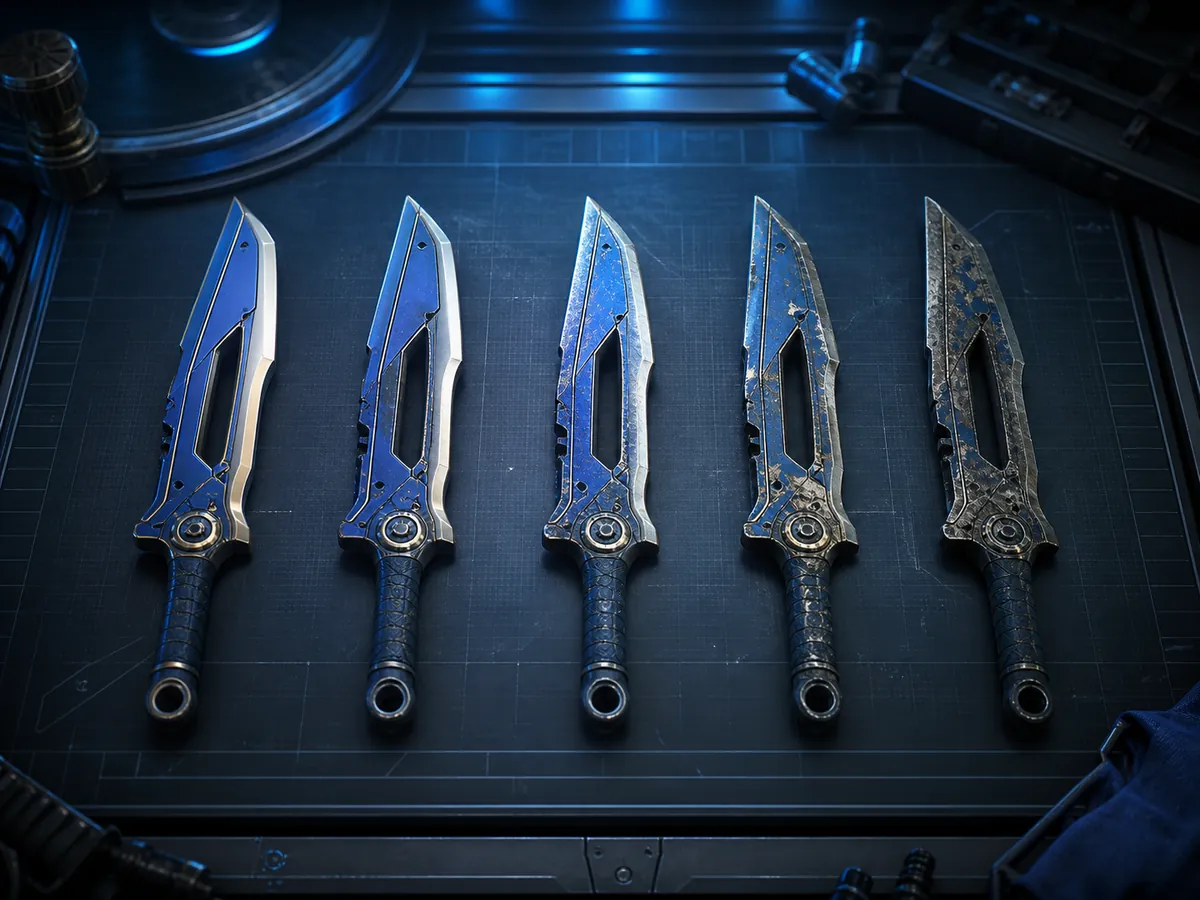
CS2 skin conditions: FN, MW, FT, WW and BS
Decode the five exterior labels, compare float values within a condition and understand why identical labels can hide different-looking CS2 skins.
Read guide
What are CS2 skins? Items, rarity and prices explained
Understand cosmetic items in CS2, where they come from and what affects their price. Learn why rarity alone does not determine value.
Read guide