How to read a skin’s Steam price history
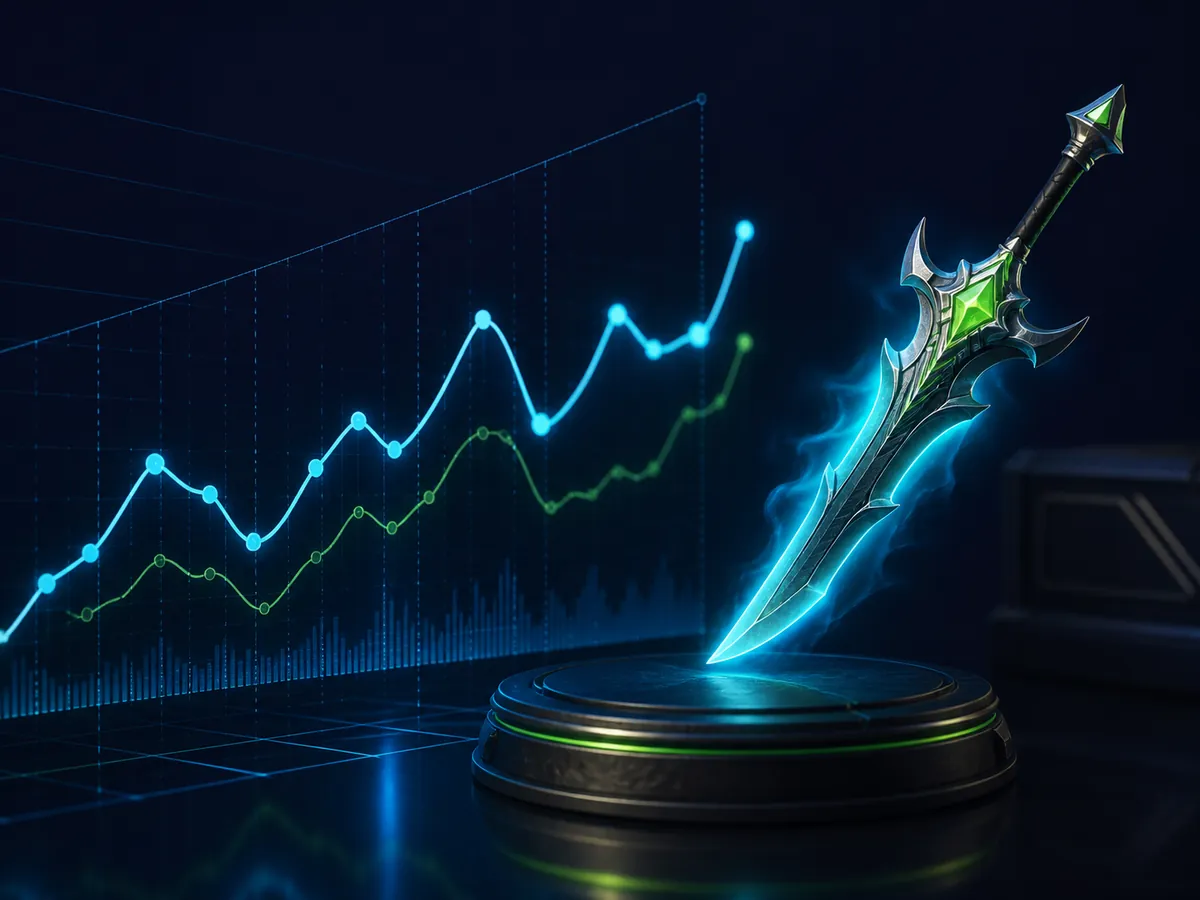
On the page of any Marketplace item there is a sales chart. It shows the past and does not promise anything about the future - but the past, read correctly, answers two main questions: how much is this skin really worth and whether you can sell it.
What does sales history show, why volume is more important than the price itself, what markup looks like and what period to look at before buying.
What the chart shows
The line is the median sales price for the period. The bars below it show the number of transactions. The switches on top change the scale: month, six months, all the time.
Below the graph lies something that is more important than itself: order book. On the left are purchase orders with prices that people are willing to pay right now. On the right are sellers' lots. The gap between the best bid and the cheapest lot is called the spread.
It is order book that shows the current state of the market, and the chart - history. Beginners usually look only at the chart and miss half the picture.
Read volume alongside price
The price at which one transaction took place does not mean anything. The price around which two hundred transactions took place in a week is the market.
Look at the bars along with the line. A nice increase in price with three sales a week usually means that someone bought cheap lots and put up expensive ones, but there are no buyers for them. As soon as it stops, the price will return.
The opposite situation is also readable: the line is level, and the volume is high - this is a liquid skin with an understandable price. These are the safest to buy for a beginner.
- One expensive item on the list does not raise the market price.
- Compare the chart only with the same condition of the item - FN and FT are different markets.
- A spread wider than 10% almost always means low liquidity.
Choose a useful time period
A month is enough for inexpensive liquid skin. For an expensive one, it makes sense to open the entire period: there you can see whether the current level was the norm before or is this a one-time surge.
Separately, check what happened in the last two weeks. Major updates, the start of operations, the release of new cases and large sales of Steam move the entire market, and buying at such a moment means buying at an unsettled price.
Common misinterpretations
The graph is considered a prediction. He describes what has already happened. skin, which grew one year, may fall next year - there are no guarantees of growth in the cosmetics market.
They forget about the commission. The difference between the purchase and sale prices of 10% is zero after the Steam commission. Profit starts after 15%.
They confuse the Steam price with the price in rubles. The chart shows the Steam market, where the calculation is carried out by the wallet balance. On third-party sites, the same skin will have a different price and different dynamics.
Look at the screenshot of the graph from the seller. Open the item page yourself.
Frequently asked questions
What does the price chart show in Steam?
Median price of completed sales by day and number of transactions. This is a story, not a forecast.
Why does the price jump on the chart?
Most often due to low volume: a few unusual trades move the median significantly. A stable level is visible only where there are a lot of transactions.
Is it possible to predict growth from a graph?
No. The graph describes the past. The price is affected by game updates, supply changes and the behavior of large owners who are not visible on it.
What is a spread?
The gap between the highest bid to buy and the seller's cheapest lot. The wider it is, the more difficult it will be to sell the item without a discount.
Which period is better to watch?
For cheap liquid skins - a month, for expensive ones - the entire available period plus the last two weeks separately.

Choosing a CS2 skin: a checklist before buying
A good skin depends on why you need it. We look at three scenarios - for gaming, for resale and for collection - and what to check in each before paying.
Read guide
How to check a skin’s float and pattern
Where to get the inspect link, which services read the parameters, how to look at float directly in the list of lots and how to check an item before an expensive purchase.
Read guide